For anyone buying their first online business who would rather buy revenue history than test a hypothesis. The argument is pitched at the buyer who still has a job, because that is the strongest position to buy from. It is not a requirement. There is a fast-track chapter for the one the letter already reached, and the buy box branches for the reader who already works for themselves.
You do not need to have bought a business before, and you do not need to know anything about Claude. Every worker configures itself through a first-run interview and explains why it is asking. START-HERE takes you from fresh install to a written buy box and your first deal scan in one sitting.
This is not passive income. You are buying a job you own instead of a job you rent. The difference is that you keep the equity, you can automate it, and you can sell it. That is worth a great deal, and it is not the same as money arriving while you sleep.
The rules every worker follows: nothing sends, posts, publishes, contacts a seller, makes an offer, signs anything, or moves money. Drafts and files only. Nothing is deleted, ever. Every price, multiple and workload figure in your reports is cited from live research, or the report says "no reliable figure found" instead of inventing one.
Buy Box Builder buy-box-builder · free, and also available on its own
Run first. It turns your deployable capital, your post-close reserve, your hours, and what you actually know from working life into written criteria: asset types in and out, price band, profit floor, multiple ceiling, concentration limits, deal-breakers, an automatability floor, and your edge per asset type. It writes those criteria where the deal scanner reads them, so sourcing starts configured.
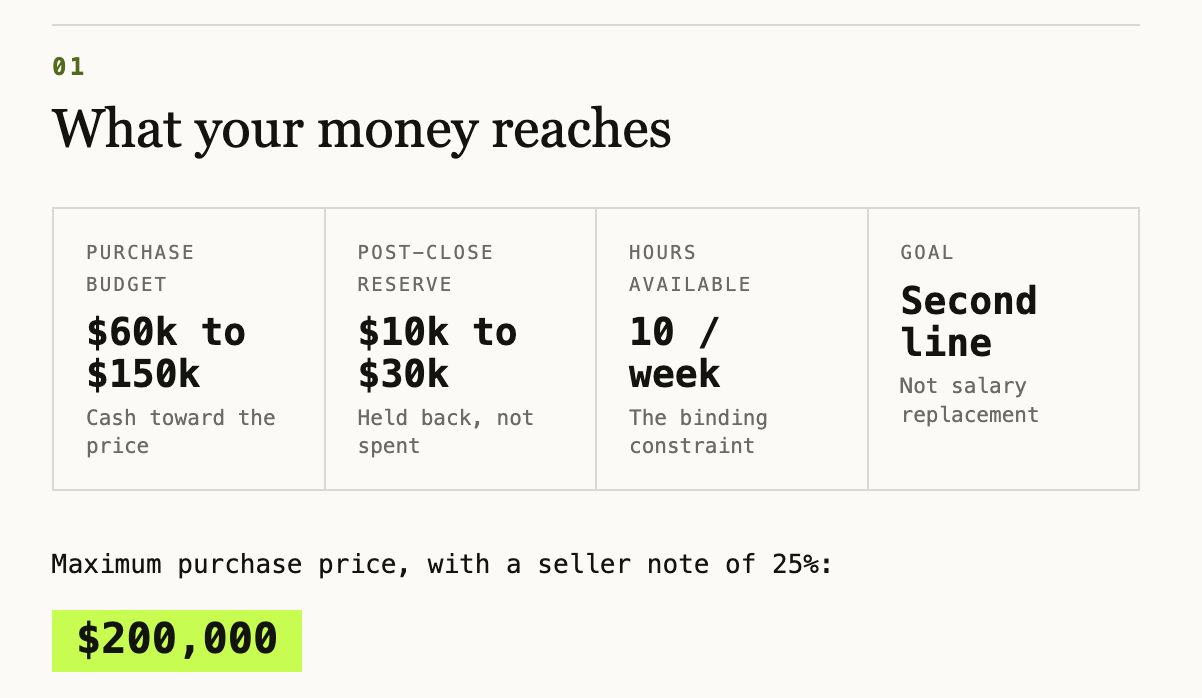
This one is free, separately, and it is in your download anyway. Writing down what you should buy is the step that has to happen before anyone spends a penny, so it does not sit behind a paywall. Same file either way.
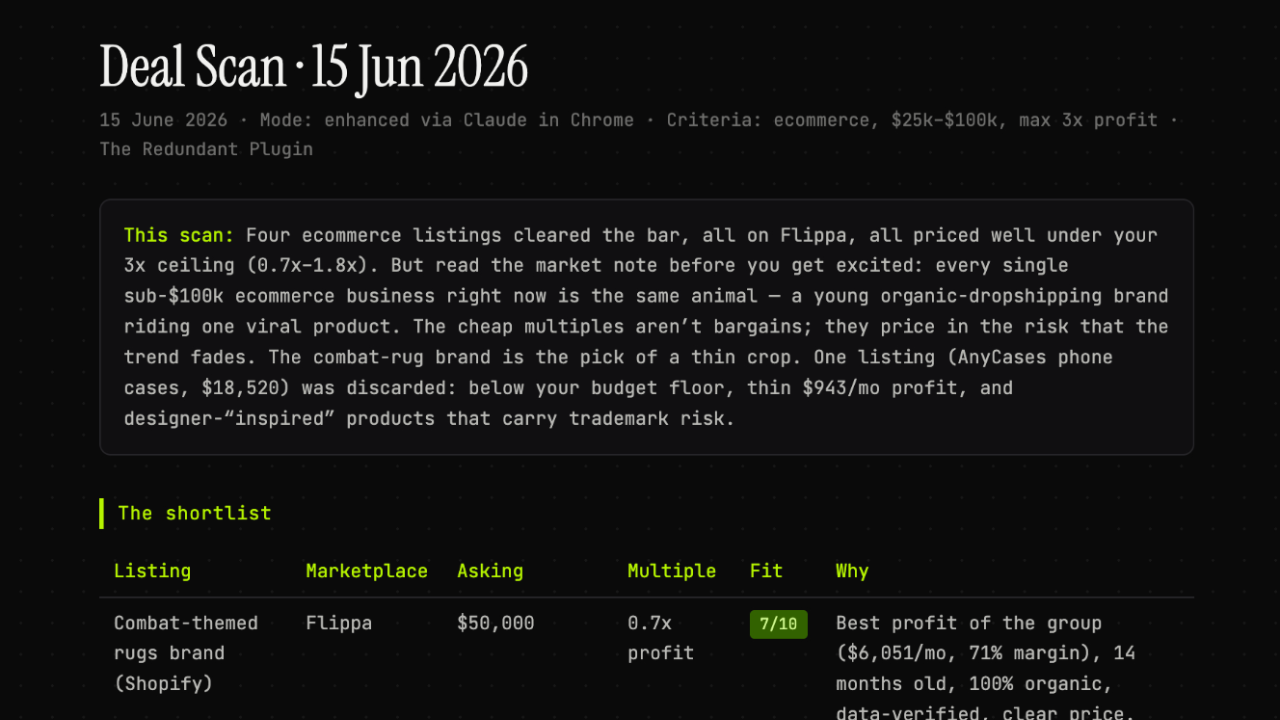
1 · Acquisition Deal Scanner acquisition-deal-scanner
real world: runs outside-in, before you've paid anyone anything
One scanner for every asset type you buy: content sites, stores, SaaS, newsletters, aged domains, Amazon FBA, KDP, Merch, and YouTube channels. Set criteria once; every run returns one ranked table of real listings, deal-breakers filtered silently, each shortlisted deal routed to the right due diligence worker below. Flippa's public listings by default; Claude in Chrome unlocks Empire Flippers, Acquire.com, investors.club, Motion Invest, and Duuce in your own browser.
2 · Acquisition Market Radar acquisition-market-radar
real world: runs outside-in, before you've paid anyone anything
What multiples are doing by category and whether the timing favours buyers or sellers. Reads the latest from Flippa, Empire Flippers, investors.club, and Centurica, and tracks what moved since the last run. So you transact on the cycle instead of guessing at it.
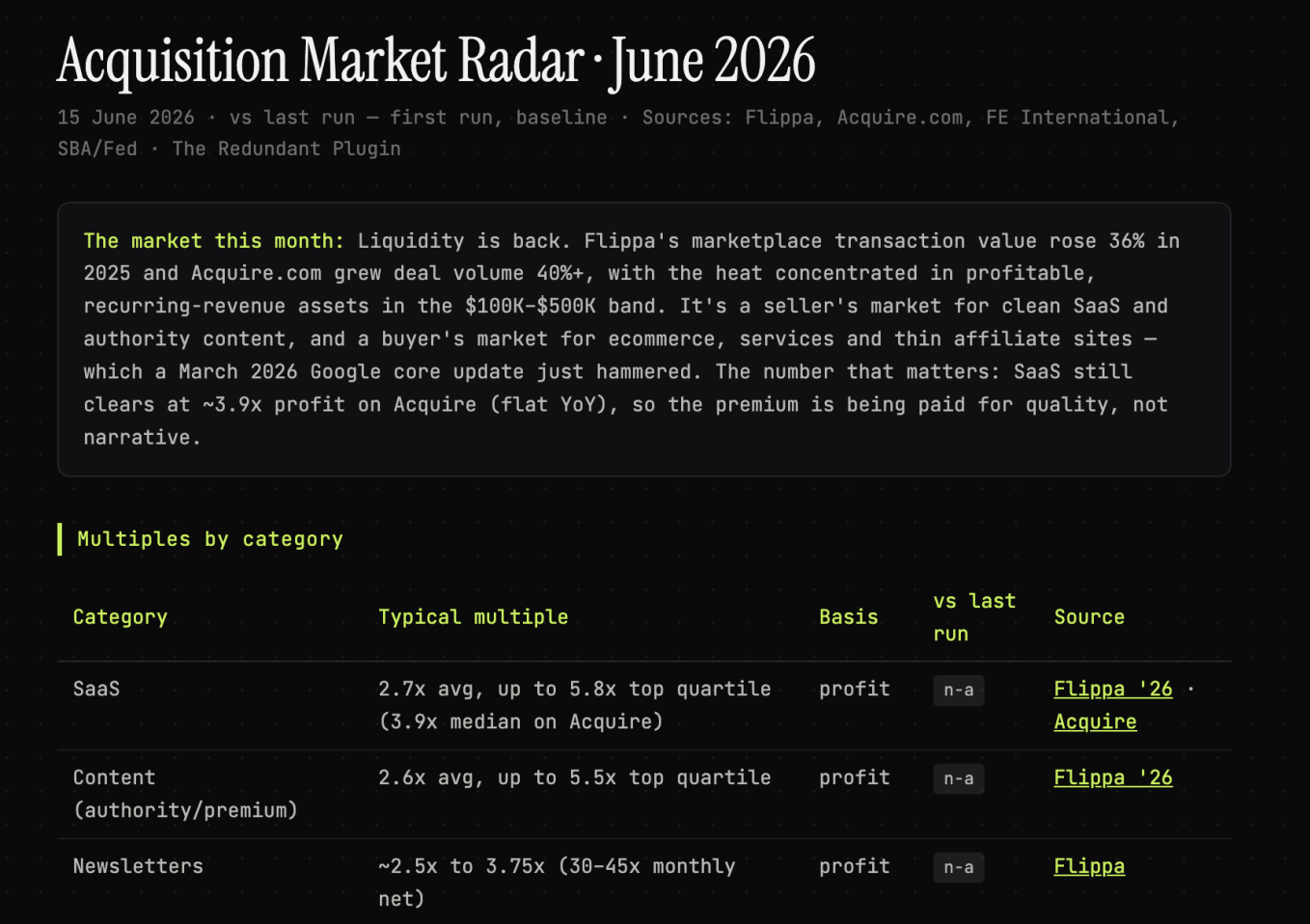
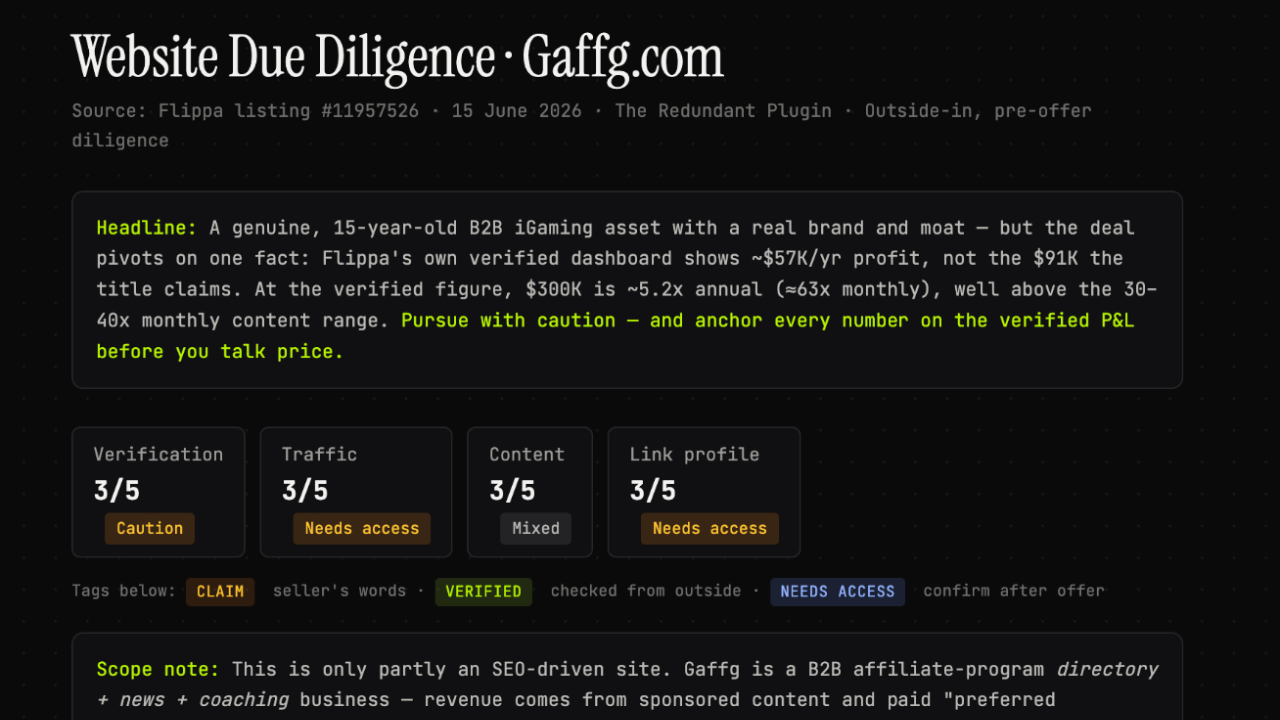
Each one is modeled on the reports the M&A firms charge $690 to $2,900 for. Each scores its parts, labels every number as a seller claim or verified or needs-access, and ends in seller questions, an access checklist, a valuation sense check, a workload projection, and a verdict. Each runs outside-in before an offer and deeper once the seller grants access.
3 · Website Due Diligence website-due-diligence
real world: the vetting M&A firms charge $2,490+ per report for
Content, affiliate, and display sites: verification, traffic (with the free Ahrefs check that catches faked claims), content, and links. The access-granted pass adds trailing-revenue and Google-updates analysis.
4 · Ecommerce Due Diligence ecommerce-due-diligence
real world: the vetting M&A firms charge $2,900+ per report for
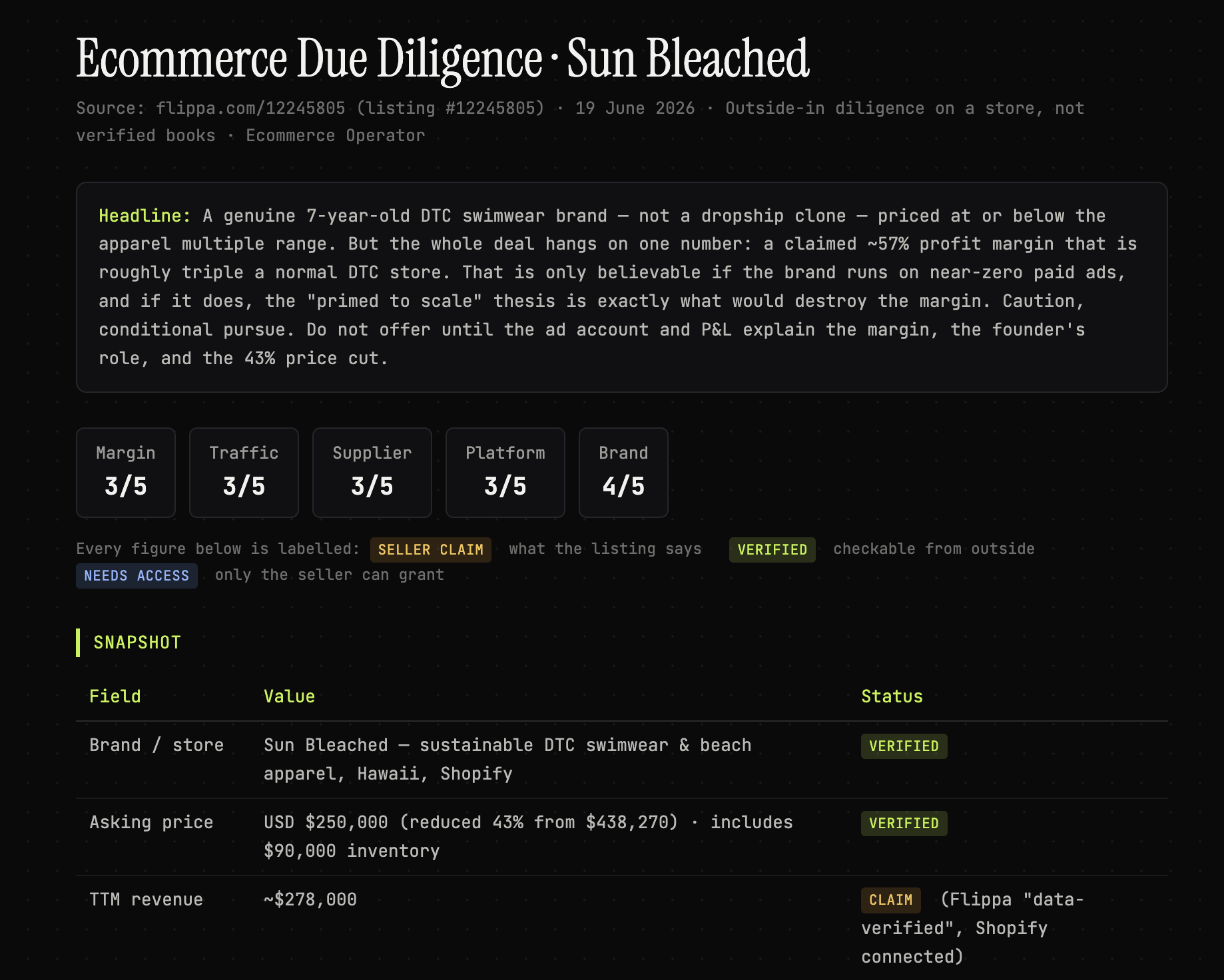
Shopify, DTC, dropship, and print-on-demand stores, six parts: margin after ads, traffic, supplier, platform, brand, and operations and team.
5 · SaaS Due Diligence saas-due-diligence
real world: the vetting M&A firms charge $2,900+ per report for
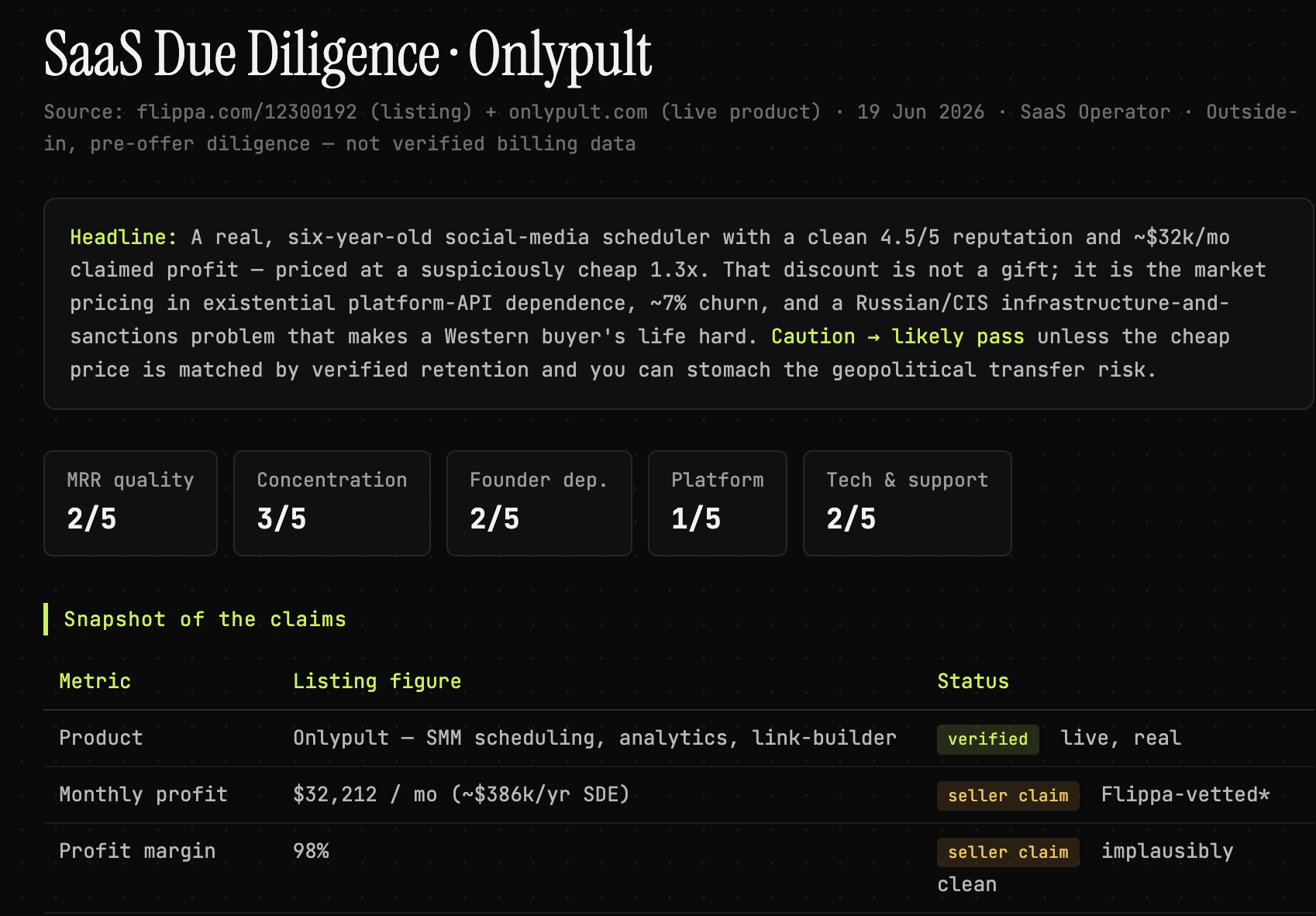
MRR quality, concentration, founder dependence, and platform risk, plus the traffic and SEO front most micro-SaaS actually lives on. The access-granted pass adds the month-by-month MRR bridge.
6 · Newsletter Due Diligence newsletter-due-diligence
real world: the vetting M&A firms charge $1,900 per report for
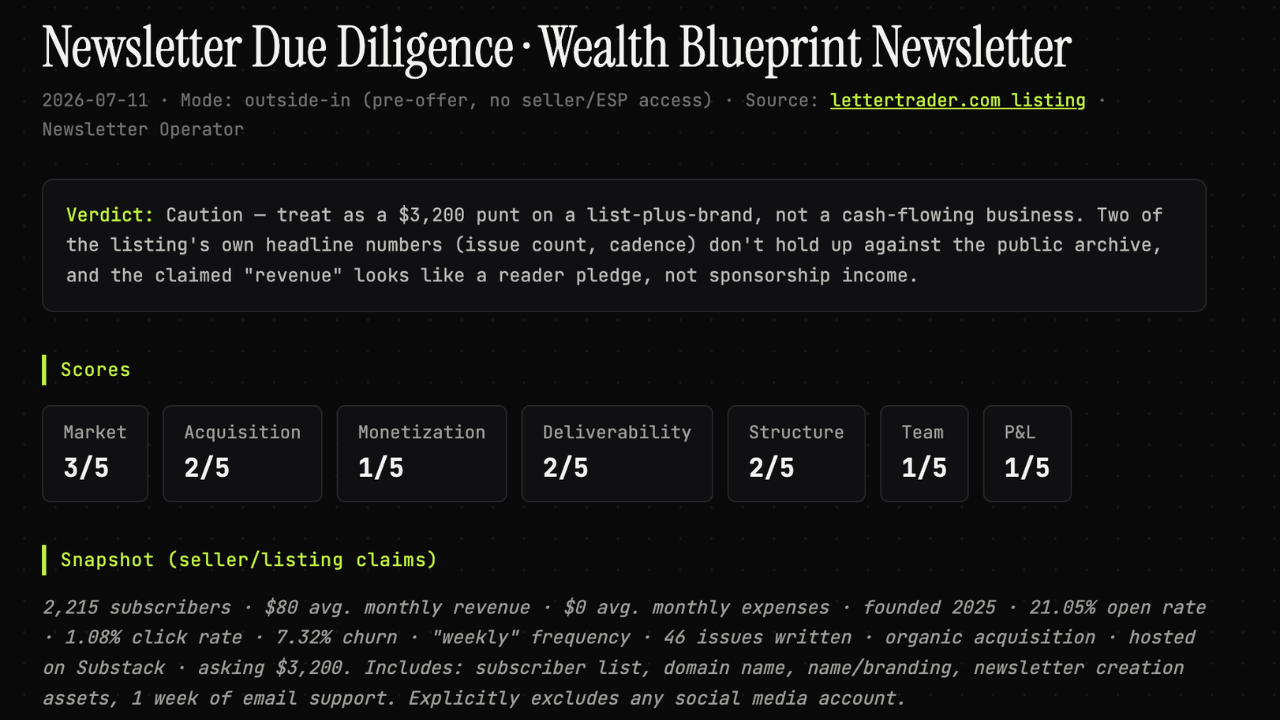
Acquisition engine, sponsor concentration, deliverability (DNS checked from the outside), founder-voice dependence, and P&L verification.
7 · Aged Domain Due Diligence aged-domain-due-diligence
real world: the nine-part vetting M&A firms charge $690 for
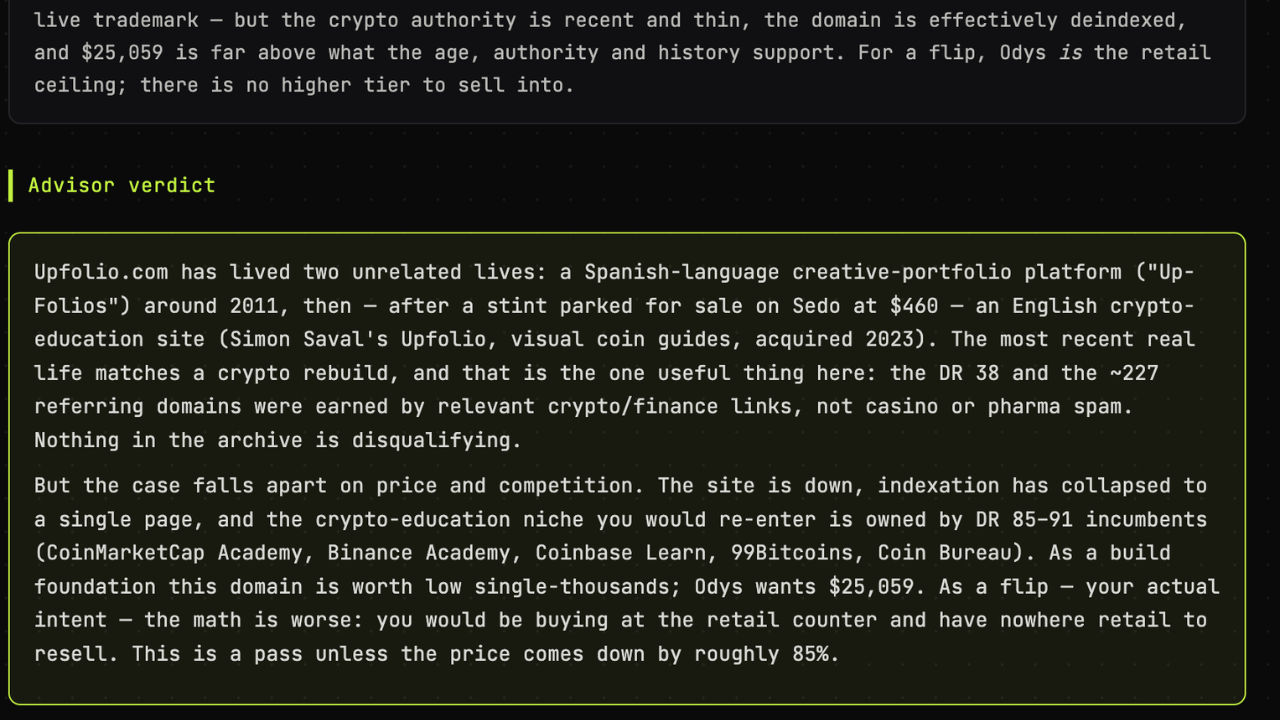
The nine-check vetting before a bid: verified age, website history era by era, backlink and anchor laundering scars, trademarks, and prior sales, ending in a maximum sensible bid.
8 · Amazon FBA Due Diligence amazon-fba-due-diligence
real world: the vetting M&A firms charge $2,900+ per report for
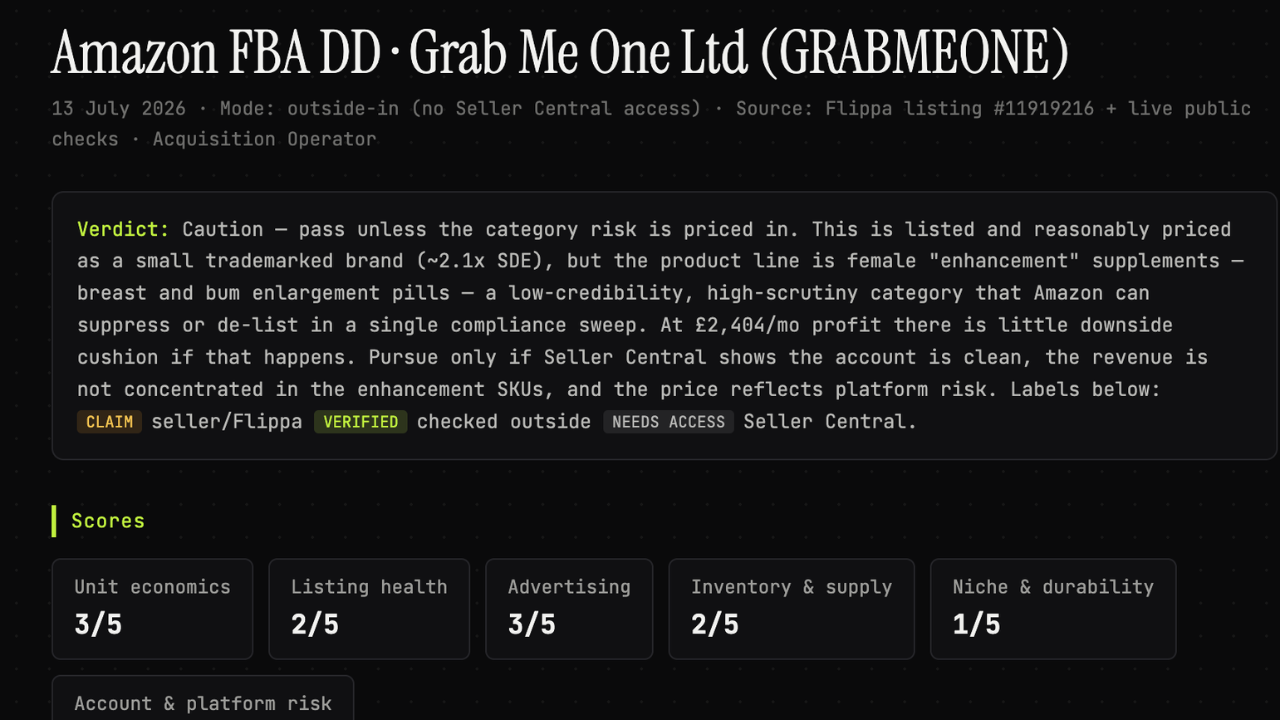
Unit economics after fees and TACOS, listing health and review authenticity, ad dependence, inventory and supply, and account and transfer risk.
9 · Amazon KDP Due Diligence amazon-kdp-due-diligence
real world: the vetting M&A firms charge $2,900+ per report for
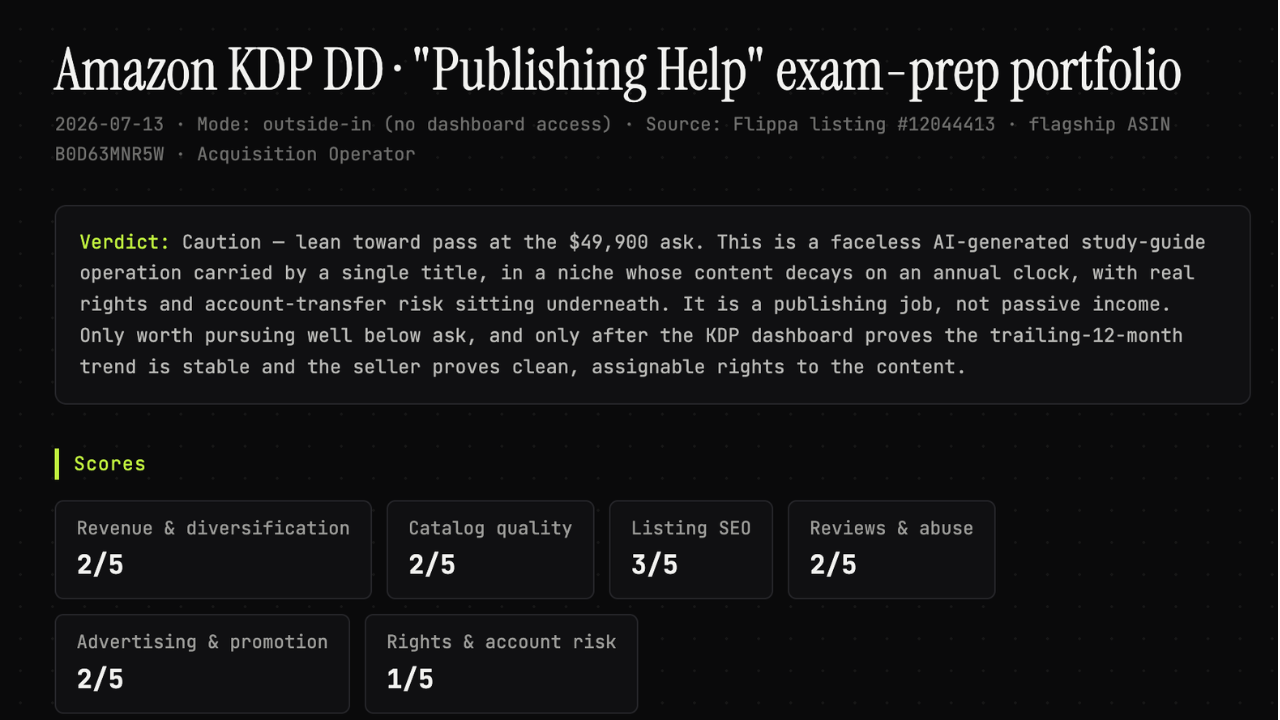
Catalog concentration, review abuse the account inherits, listing SEO, ad dependence, and the rights and pen-name transfer questions that kill KDP deals.
10 · Amazon Merch Due Diligence amazon-merch-due-diligence
real world: the vetting M&A firms charge $2,900+ per report for
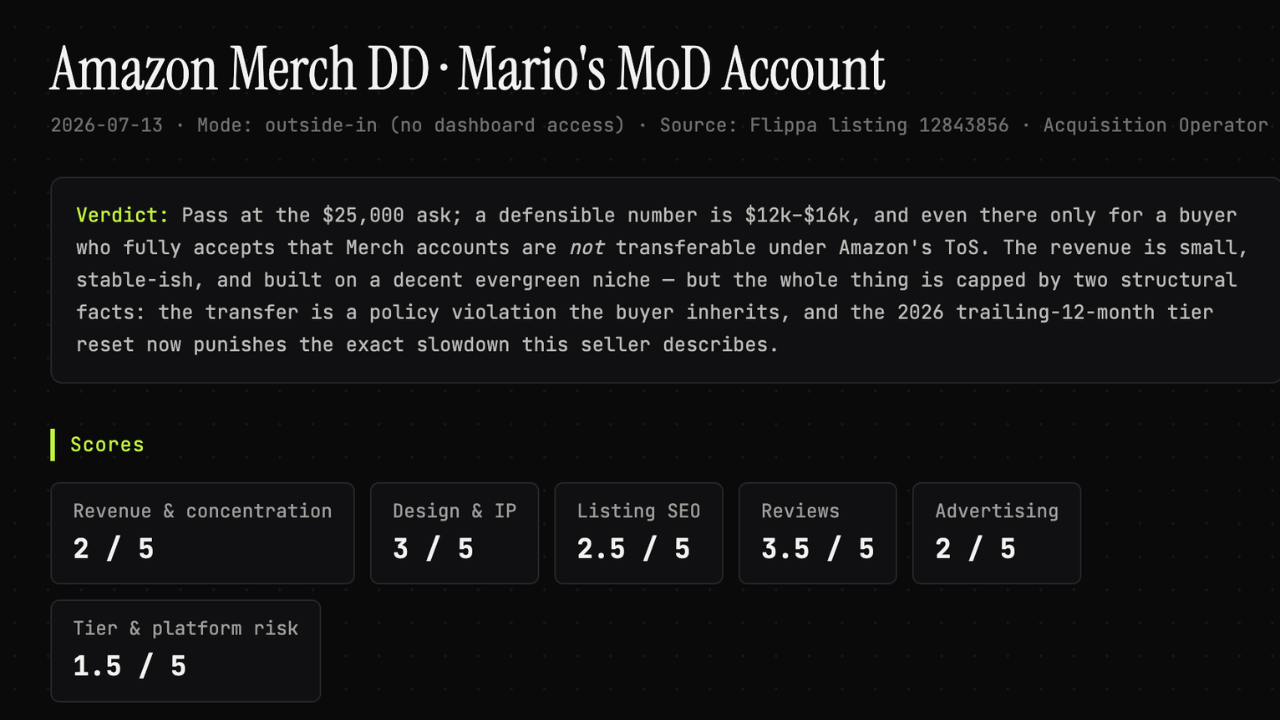
Design IP exposure checked against live trademarks, trend-vs-evergreen concentration, account tier, and the transfer problem stated plainly.
11 · YouTube Channel Due Diligence youtube-channel-due-diligence
real world: the vetting M&A firms charge $2,490+ per report for
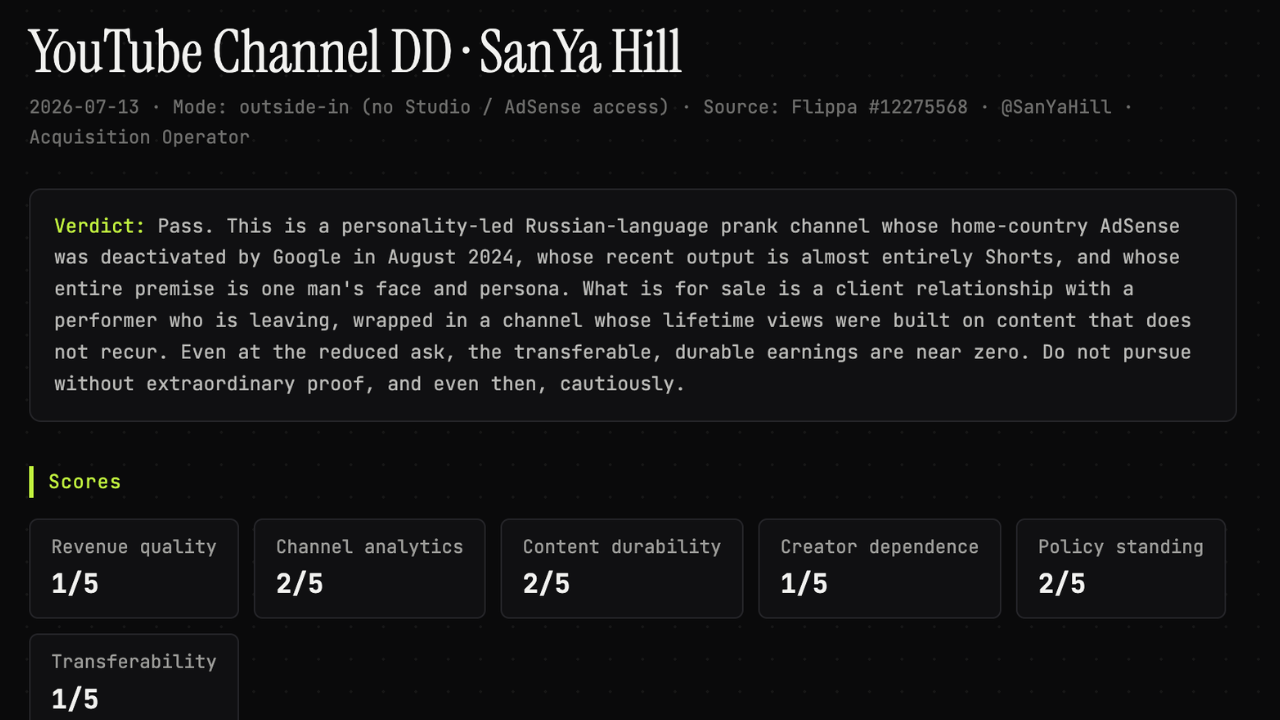
Revenue quality and RPM reality, virality dependence, the creator-dependence kill question, policy standing, and transferability with deal-structure notes.
12 · Business Appraiser appraise this business
real world: the valuation a broker runs on a discovery call, minus the 10 to 15% success fee
The full multiple build-up with every adjustment shown, real sourced comps, and a floor, likely and ceiling. Pricing a listing is a diligence step, so run it before you name a number, and again on your own business the year before you sell. A black-box number off a form tells you nothing you can argue with; a number with the build-up shown is one you can hold the line on, or walk away on.
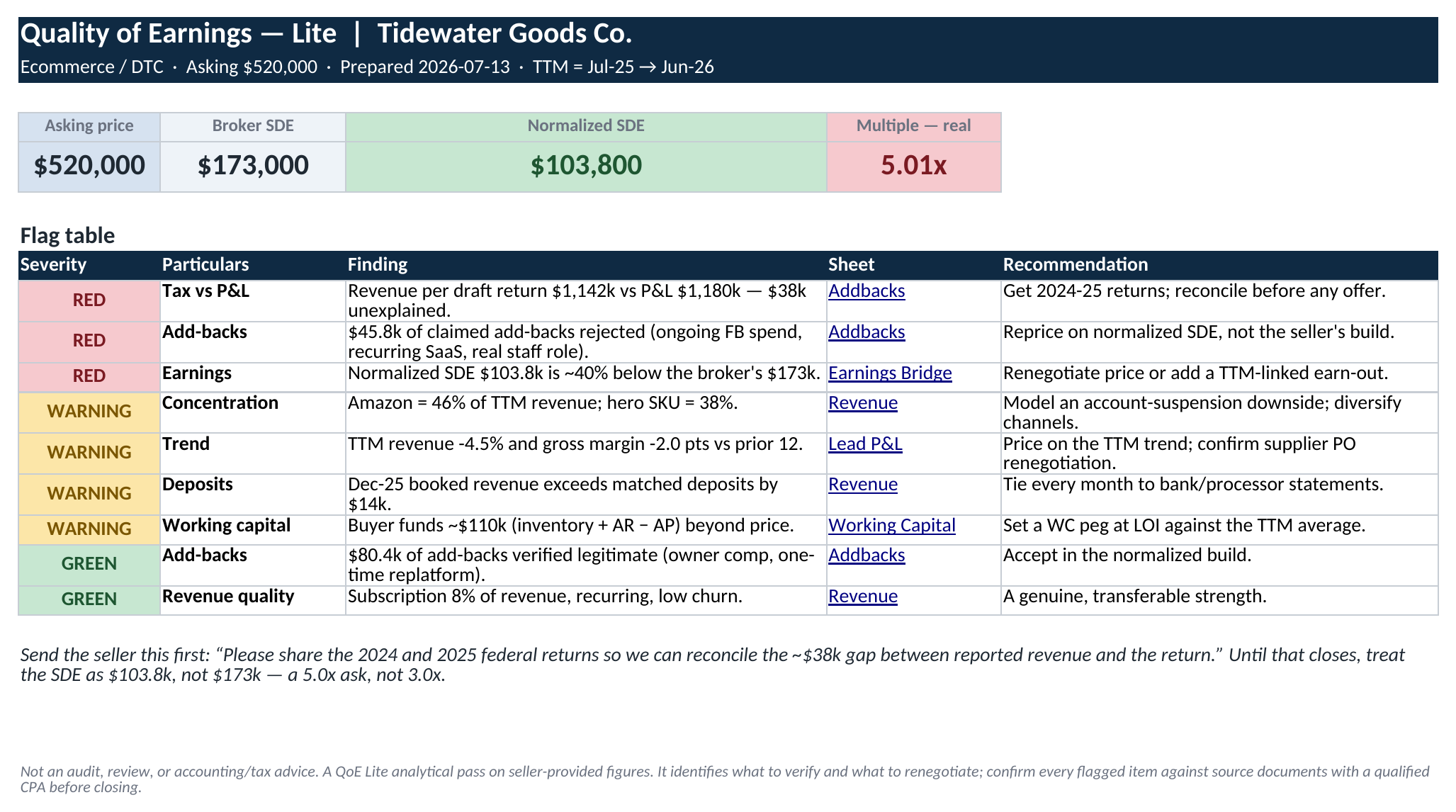
13 · QoE Lite Worker qoe-lite-worker
real world: the $3,500 CPA deliverable, as a working Excel workbook
The Quality of Earnings pass, as a working Excel workbook: a Red/Warning/Green flag summary, the lead P&L with annual and trailing views, revenue and cost breakdowns, every broker addback tested individually, a reported-to-normalized earnings bridge, and working capital. The normalized number against the asking price is the negotiation.
14 · LOI Drafter loi-drafter · never legal advice
real world: the clauses a lawyer bills hours to flag
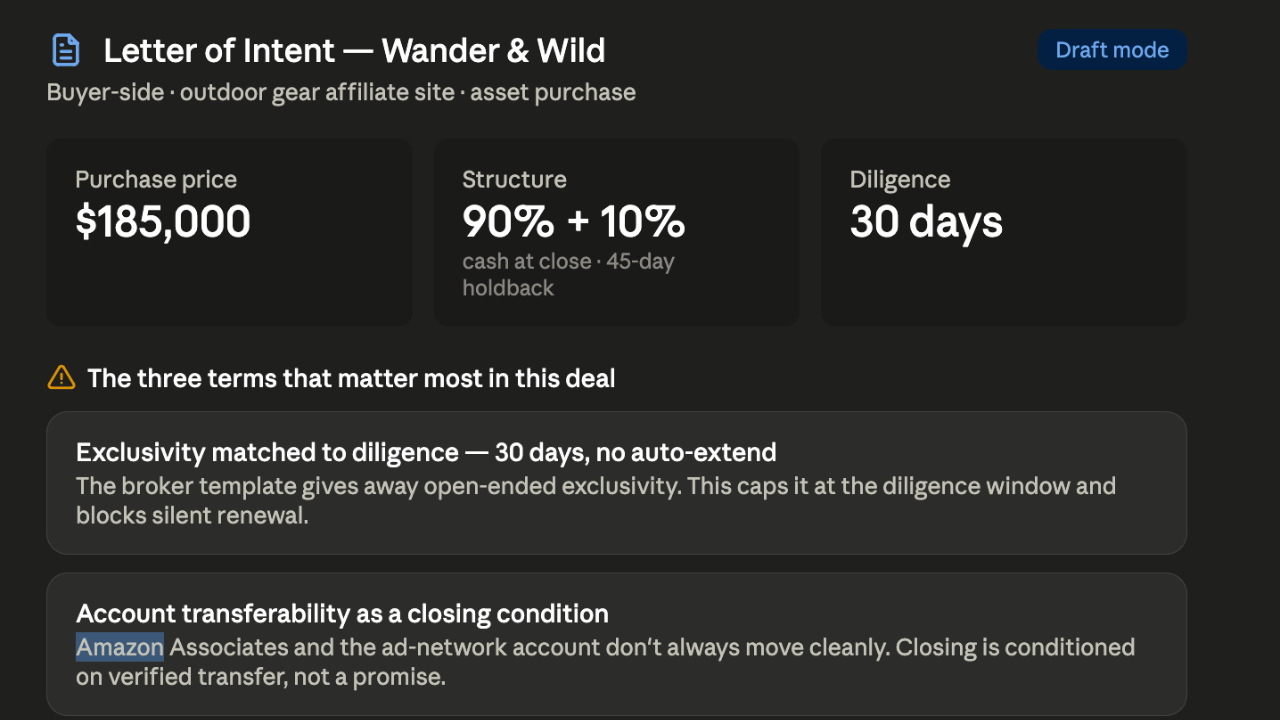
Drafts a complete buyer-side Letter of Intent (itemized asset list, structure, diligence access, exclusivity matched to the diligence period), or reviews a received one clause by clause, flagging the classic traps. Working drafts for negotiation, never legal advice; a lawyer reviews before signing.
15 · APA Reviewer apa-reviewer · never legal advice
real world: the clauses a lawyer bills hours to flag
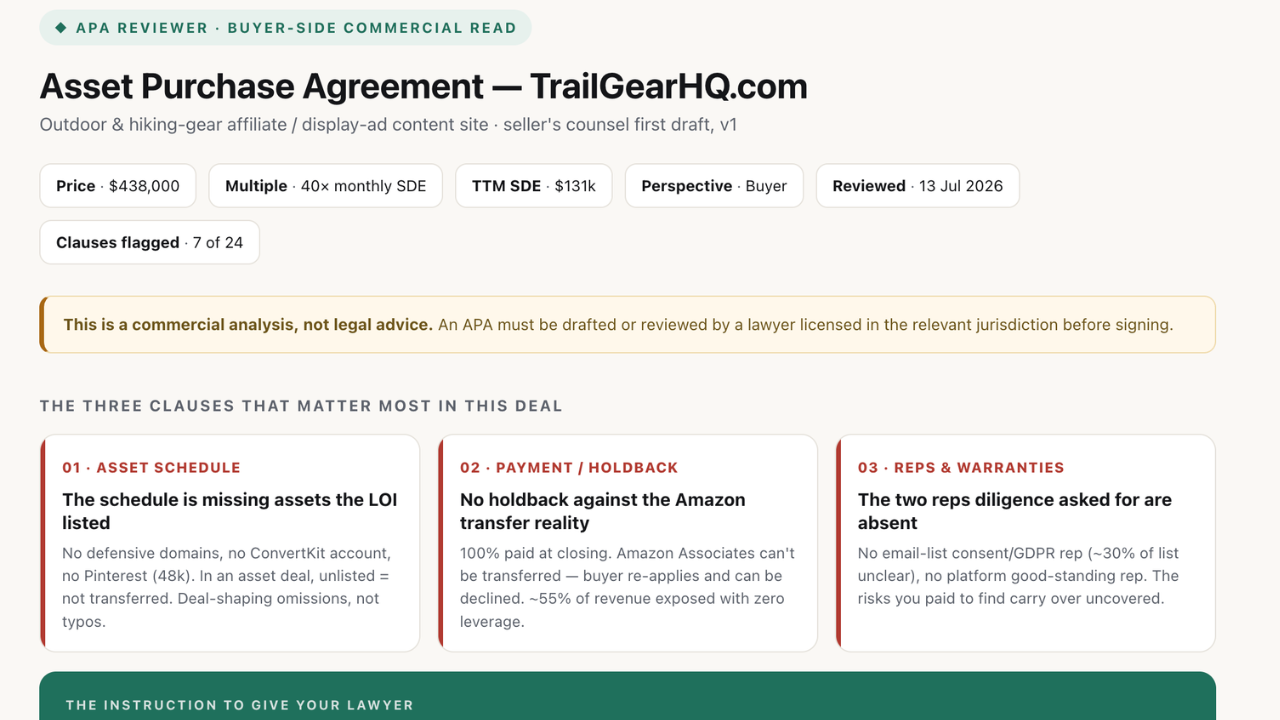
The closing document: reviews an Asset Purchase Agreement clause by clause for risk allocation, or drafts the commercial term sheet your lawyer works from, mapping the diligence findings to the reps, indemnities, and holdbacks they justify. Commercial analysis, never legal advice.
16 · CIM Builder cim-builder
real world: the sale documents brokers build behind a success fee
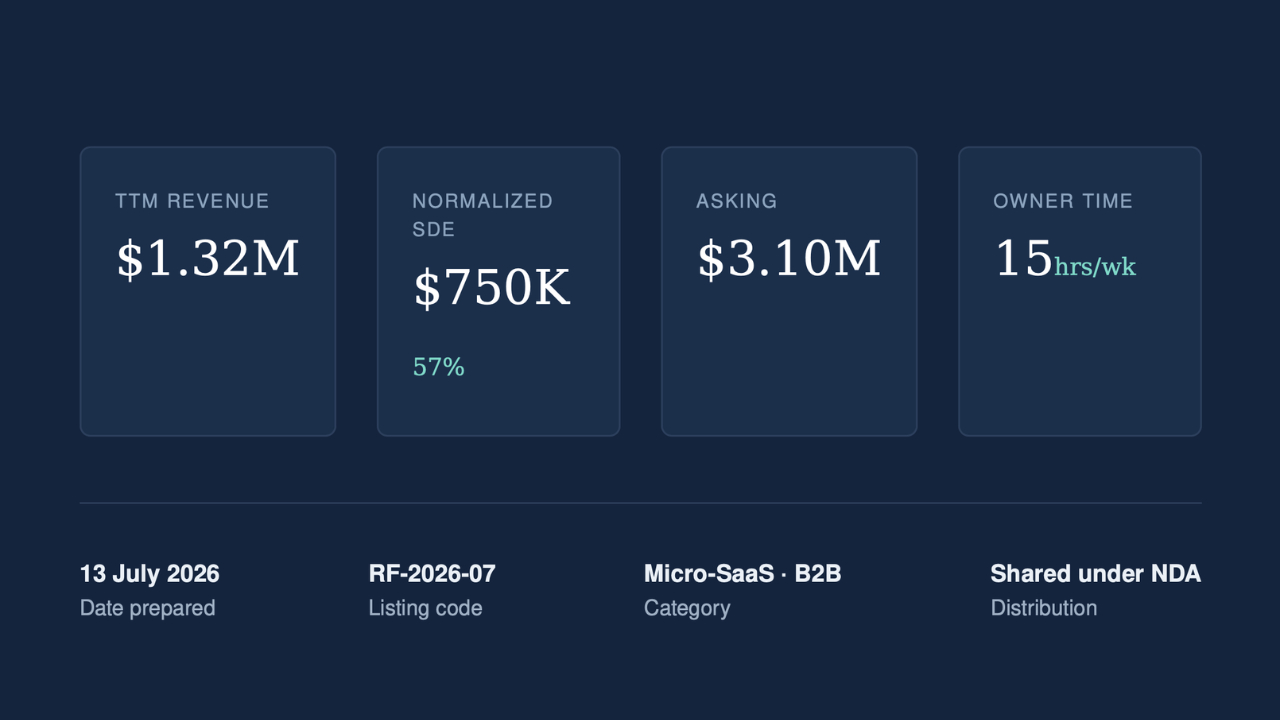
Turns your real numbers into the two documents serious buyers expect: a one-page anonymous teaser and a full Confidential Information Memorandum that survives diligence intact, risks named before the buyer finds them.
Thirteen sections, written to be read in one sitting. The Spreadsheet Argument: your job is a bundle of tasks and AI only needs enough of the bundle. Why buy instead of build. The Window: salary, borrowing power, access, and time without panic, all four vanish with the letter. What Your Money Actually Reaches, which is the arithmetic most first-time buyers wish they had seen first. The Buy Box. Where the Deals Are, across marketplaces, brokers, and off-market. What diligence is really asking, in six questions. The Offer and the Close, including why structure matters more than price. The First 90 Days: change nothing, then fix, then automate. The Money Rules. The Letter Came: the fast-track, and why you do nothing for two weeks. The workers. And what not to do.
- The runway and capital sheet. Fill in the blue cells and get three separate numbers: your runway in months, the capital you could deploy, and the reserve you hold back for after close.
- The 90-day tracker. Thirteen weekly rows for deals seen, deals passed with reasons, conversations opened, and one proof action, with the pass rate calculated.
A year of Pro membership. The Redundant community's locked Pro channel, included for 12 months: where the searches run in the open, buy boxes get compared, and the passes get posted with their reasons. Normally $19/month, not billed to you for your first year.
- Acquire Playbook plugin. Install once in Claude Cowork and all sixteen workers appear, with the docs and the toolkit alongside them.
- The Buy Box Builder plugin. Free, and also available on its own.
- The playbook document, markdown and PDF.
- The two toolkit spreadsheets.
- START-HERE: fresh install to your first deal scan in one sitting, written for non-technical people.
- Your community invite: 12 months of Pro membership.
You need Claude Desktop with Cowork, a paid Claude subscription, and a working folder. No connectors required. Claude in Chrome is optional and lets the deal scanner read the login-walled marketplaces in your own browser.
Nothing here is legal, financial, or investment advice. Buying a business carries real risk of loss. Use a lawyer and an accountant before money moves.
Get the playbook · $299